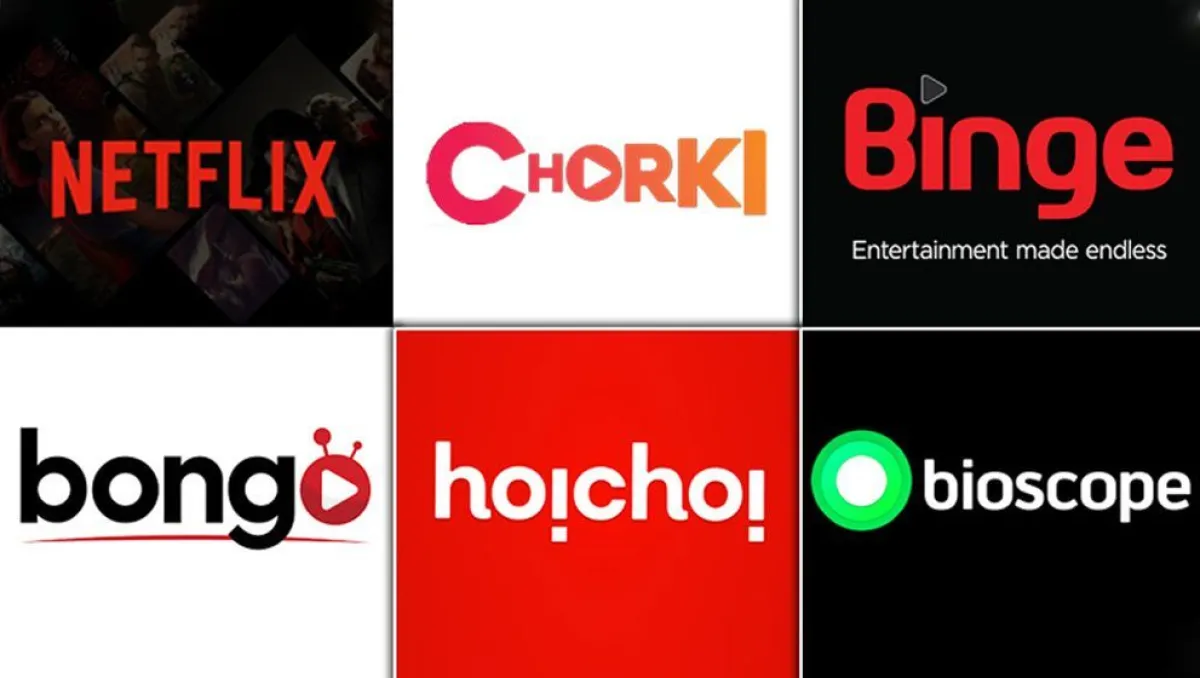
The viewers of the country got to know OTT through foreign platforms. In the beginning there was a certain class of media audience. But with time all calculations have changed. People of various classes and professions are constantly joining the medium. With the increase in audience, the list of OTTs in the country is also getting longer. Expanding scope of work of builders-artists-artisans. However, at the same time domestic platforms like Charki, Banga, Deepta Play, iScreen are having to go to war under the dominance of global giants like Netflix, Hothai, Amazon Prime.
Millions of people in Bangladesh currently watch OTT content regularly. However, a large portion of them are viewers of popular platforms like Netflix, Hoochie and Disney Plus Hotstar. Especially the young people prefer to watch the content of these media. But the country's platforms are not behind. It has improved tremendously in the last three-four years. According to stakeholders, the OTT market in Bangladesh is currently around Tk 300-500 crore annually, which is growing at a rate of 20-25 percent every year. They say that the popularity of OTT in the country is increasing rapidly. If this continues, the number of OTT users will cross 10 million by the end of this year. Although many people are expressing concern about this matter. Currently 10 percent surcharge is levied on OTT services. This has increased the operating costs of domestic platforms. This has a negative impact on customer service. In that opportunity, the foreign platforms are pulling the domestic audience as an additional advantage.
In terms of quality of content, storytelling, domestic content is amazing, but in terms of budget, domestic platforms are not close to the budget of foreign platforms, especially Netflix or Prime Video. Where the budget of a 'squid game' or 'money heist' is hundreds of crores, the budget of a complete series in Bangladesh is estimated to be only 1-2 crores! However, the domestic content shows surprise in the depth of the story even though the budget is behind. Initially there were questions about the quality of domestic OTT content, but it is currently improving rapidly. Series like 'Takdeer', 'Karagar', 'Mahanagar' 'Kaizer' or 'Pet Kata Sh' have proved that it is possible to compete with foreign content if you have strong talent and original story. Foreign viewers are also now appreciating Bangladeshi thriller or drama content.
Meanwhile, a lot of division can be observed in terms of audience acceptance of OTT. Viewers still prefer Netflix or Apple TV for English or international quality content. However, people are turning to native platforms to watch familiar stories from their own language, culture and surroundings. Even though foreign audiences of different languages cannot be attracted in the same way, native OTT is now the biggest entertainment medium for expatriate Bangladeshis. Although there are still many questions about the quality of work, the high subscription fees of foreign platforms and the low and easy payment system of domestic platforms are giving the viewers an added advantage. From there, many people are getting used to watching OTT content at home instead of theaters. However, if the platforms are still not able to reach their content to the outside audience, the platforms are lagging far behind in the global market.

If the question is, can our platforms really keep up with Netflix or Amazon? Everyone might be inclined to answer both 'yes' and 'no'. Domestic platforms have been struggling to keep pace with foreign OTTs since their inception. But the truth, though unpopular, has progressed a lot with time, but has not yet reached a state of keeping pace. It remains a dream for domestic platforms to match the quality of content and budgets of foreign platforms. While catching up in creativity, domestic platforms still lag behind in marketing, data analytics and global marketing. Foreign OTTs develop different strategies for each country, which is limited in terms of our domestic platforms. But the hope is that Netflix or Hotch is now producing content with Bangladeshi producers, which is recognizing our talent in the international market. On the other hand, the local audience's passion for local content and understanding of their own culture is giving the country's platforms a local advantage. As a result 'Charki' or 'Hiichi-Bangladesh' has created a certain audience with regular good content.
On the other hand, the domestic platforms have to face technology and infrastructure challenges. OTT is based on high-speed internet and advanced streaming technology. According to Okla Speedtest, internet speed in Bangladesh is still lower than the global average. It can be said that foreign platforms are quite advanced in terms of technology. The algorithm or interface of Netflix is so smooth that a user can easily find the content of his choice. On the other hand, complaints of buffering problems, app crashes or weak search engines are often heard on native platforms. Besides, modern facilities like Four-K resolution or Dolby Atmos sound are not yet fully effective in native apps. In order to survive in the competition, reducing the gap in these issues is the biggest challenge for the country's platforms.
But whatever the success or failure rate, it goes without saying that the country's OTT industry is going through a transformation. Foreign platforms have brought challenges as well as opened doors to the global market. If domestic OTTs can develop technology and cling to their cultural roots, it won't take long to not only compete, but establish themselves in the global market.