
Escalating Family Violence Against Women Highlights Struggle for Inheritance Rights and Safety Within Households
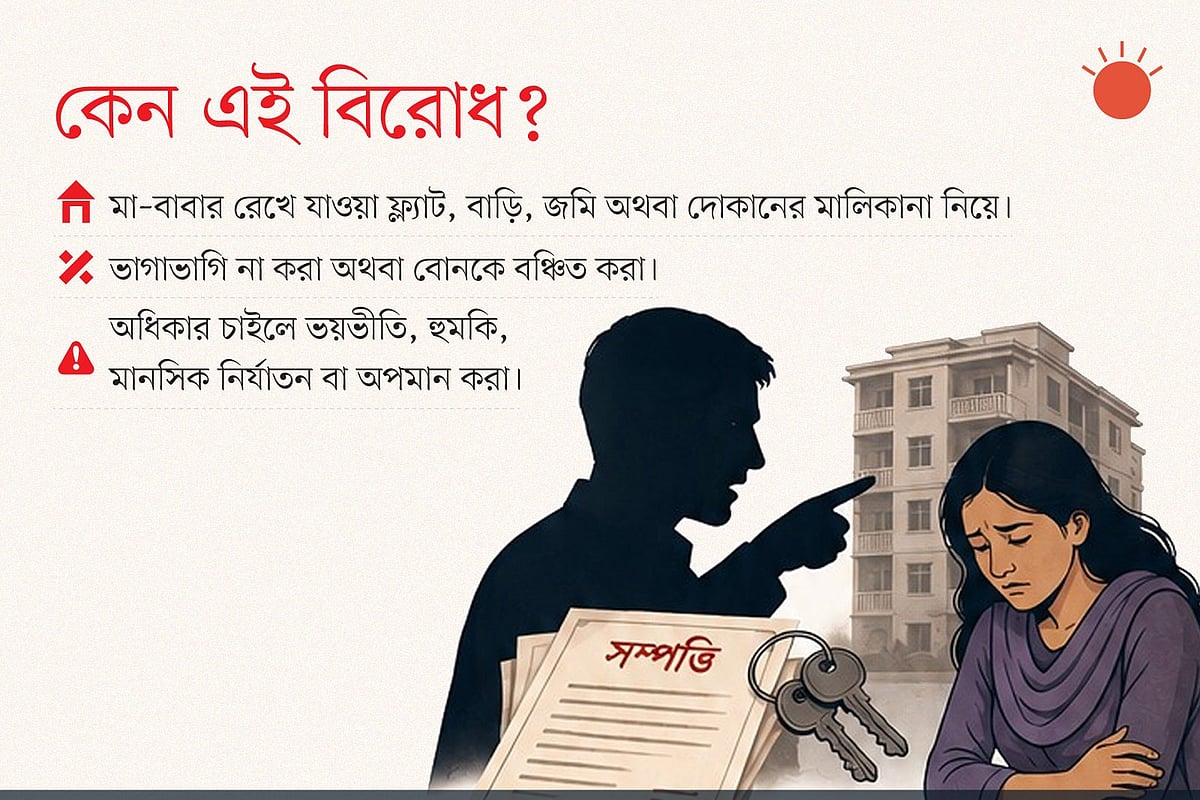
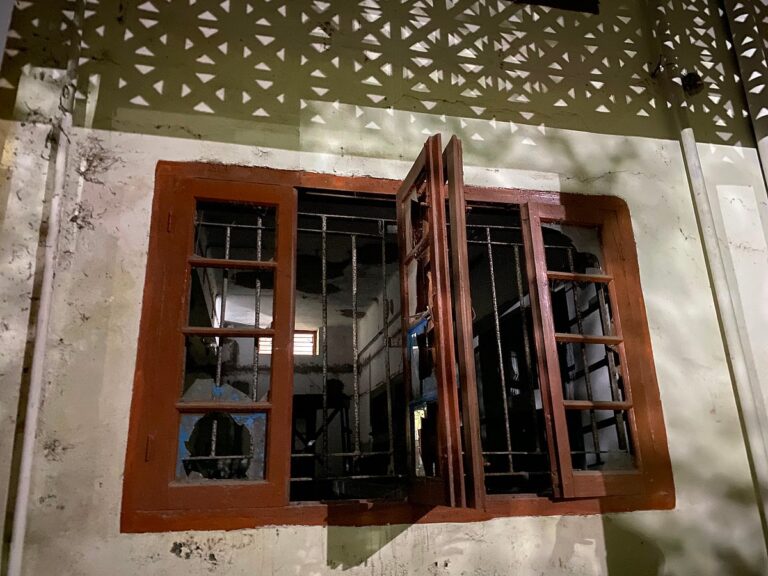
Photo Collected
UTTARA, Dhaka — A growing number of women are reporting instances of domestic abuse, financial coercion, and psychological torment at the hands of their own brothers, highlighting a trend of intra-family violence that extends beyond the common focus on spousal mistreatment. Experts and activists note that these incidents, often triggered by disputes over inheritance and parental property, underscore deep-seated gender imbalances within society.
One case currently under investigation involves a 44-year-old female entrepreneur who has filed a general diary (GD) with the Uttara West Police Station against her brother. The woman, whose parents passed away in 2000 and 2019 respectively, alleges that her brother is attempting to force her out of a 1,200-square-foot apartment in Uttara that their mother had verbally designated to be shared equally between them.
The woman alleges that the dispute escalated after she issued a legal notice against her brother for allegedly stealing property documents. She claims her brother subsequently threatened her, engaged in abusive behavior, and intimidated her while staying at the residence. Sub-Inspector Mohsin Hasan of the Uttara West Police Station confirmed that authorities are seeking court approval to further investigate the allegations, noting that the reported pattern of behavior suggests a credible case of harassment.
The victim emphasized that her struggle is not merely about real estate, but about establishing a standard for women’s rights within the family unit. “It is unacceptable for a woman to face deprivation and abuse from her own kin,” she stated, adding that she is preparing to file a formal lawsuit.
The brother has denied the allegations, characterizing them as baseless. He claimed that he has avoided the Uttara residence for two months due to his sister’s alleged misbehavior and asserted that he is seeking to divide the property according to Sharia law rather than verbal agreements.
This case is not an isolated incident. Various women interviewed shared similar experiences, ranging from being deprived of inheritance to being physically ousted from family homes after the death of parents. In one instance, a school teacher reported being subjected to severe mistreatment by her brother after she sought refuge in her parents’ home following the death of her husband. Others reported being excluded from ancestral property or harassed by brothers in local communities.
Data from the non-governmental organization Ain O Salish Kendra (ASK) reveals that from January to July of this year, there were 35 recorded incidents of women and children suffering violence at the hands of their own family members, resulting in 30 deaths.
Under the Domestic Violence (Prevention and Protection) Act, 2010, abuse is not limited to physical harm. The law categorizes financial exploitation, denial of rights to property, and psychological abuse as domestic violence. Despite this legal framework, advocates point to societal norms that prioritize male dominance as a primary driver of these conflicts.
Deepti Sikder, Director of Legal Advocacy at the Bangladesh Mahila Parishad, stated that families often inadvertently empower sons from childhood, granting them preferential treatment and greater control over assets. She argued that these learned power dynamics often manifest as aggression and entitlement in adulthood.
“Changing this situation requires the establishment of equality in inheritance laws, raising children with equal rights within the family, and fostering awareness across all sectors of society,” Sikder said.
0%
0%
0%
0%