Gas shortages trigger production slowdowns and wage losses for industrial workers in Narsingdi Narayanganj and Gazipur
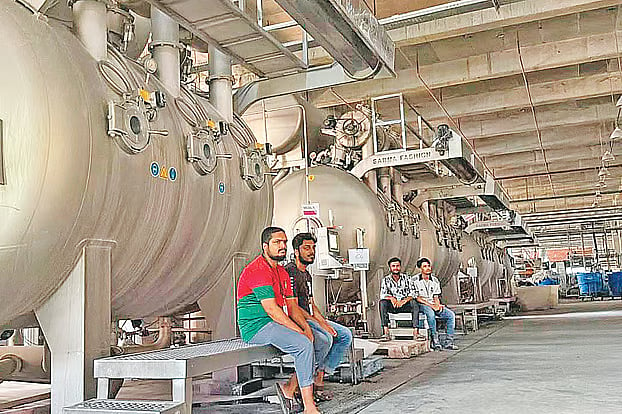
Photo Collected
Severe natural gas shortages across the industrial hubs of Narsingdi, Narayanganj, and Gazipur have forced factories to shutter or slash production, triggering a sharp decline in workers’ earnings. The crisis has hit laborers particularly hard, as the elimination of overtime work—a critical source of supplementary income—has left many struggling to meet basic living expenses.
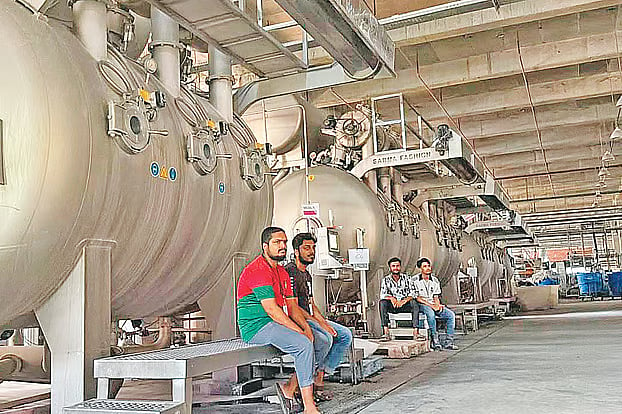
In Narsingdi, which hosts over 300 gas-dependent industrial units, the situation is increasingly precarious. In the Chawala industrial area, where at least 30 sizing and dyeing factories employ approximately 10,000 people, the gas supply failure has already forced the closure of 25 plants. Momin Sizing Mill, for instance, has remained shut for over a week, leaving workers like Abdus Salam uncertain about their financial future. With last month’s wages still unpaid and production cycles stalled, many laborers are now considering returning to their ancestral villages.
Industrial leaders warn of a domino effect. Md. Elias Mia, managing director of Rabbi Sizing Mill, noted that because the textile, spinning, and dyeing sectors are interlinked, the collapse of one segment inevitably paralyzes the entire chain. Rashedul Hasan, president of the Narsingdi Chamber of Commerce and Industry, cautioned that prolonged closures are causing machinery to deteriorate and raised concerns about potential labor shortages if workers migrate away from the region permanently.
The crisis is equally severe in the Panchabati BSCIC Industrial Estate in Narayanganj. Garment workers report that the lack of power and gas has eliminated all overtime opportunities, with some factories closing early in the afternoon. For many, this represents a significant pay cut; Rashedul Hasan, a worker at Tamai Knit Garments, stated that his monthly income is projected to fall by nearly 20 percent compared to the previous month. At Four Design Private Limited, managing director Ataur Rahman reported that production has dropped to a quarter of its normal capacity, directly impacting the wages of contract-based workers who are paid according to output.
M.A. Shahin, president of the Narayanganj district branch of the Bangladesh Garment and Sweater Workers Trade Union Center, confirmed that the reduction in production has left workers unable to exceed their standard eight-hour shifts. He emphasized that contract workers are the most vulnerable to these wage losses.
In Gazipur, factory directors face the daily challenge of operating only when gas pressure occasionally stabilizes. For workers like Ataur Rahman of Panasia Clothing Limited and Rumana Akhter of Ananta Limited, the loss of overtime pay has severely strained household budgets, forcing families to dip into savings or struggle to support dependents.
Labor advocates are now calling for immediate government intervention to resolve the energy crisis. Mohammad Ashrafuzzaman, organizing secretary of the National Garment Workers Alliance, warned that if the gas shortage persists, it will not only cripple the industrial sector’s output but also lead to widespread job insecurity for the country’s manufacturing workforce.
0%
0%
0%
0%