
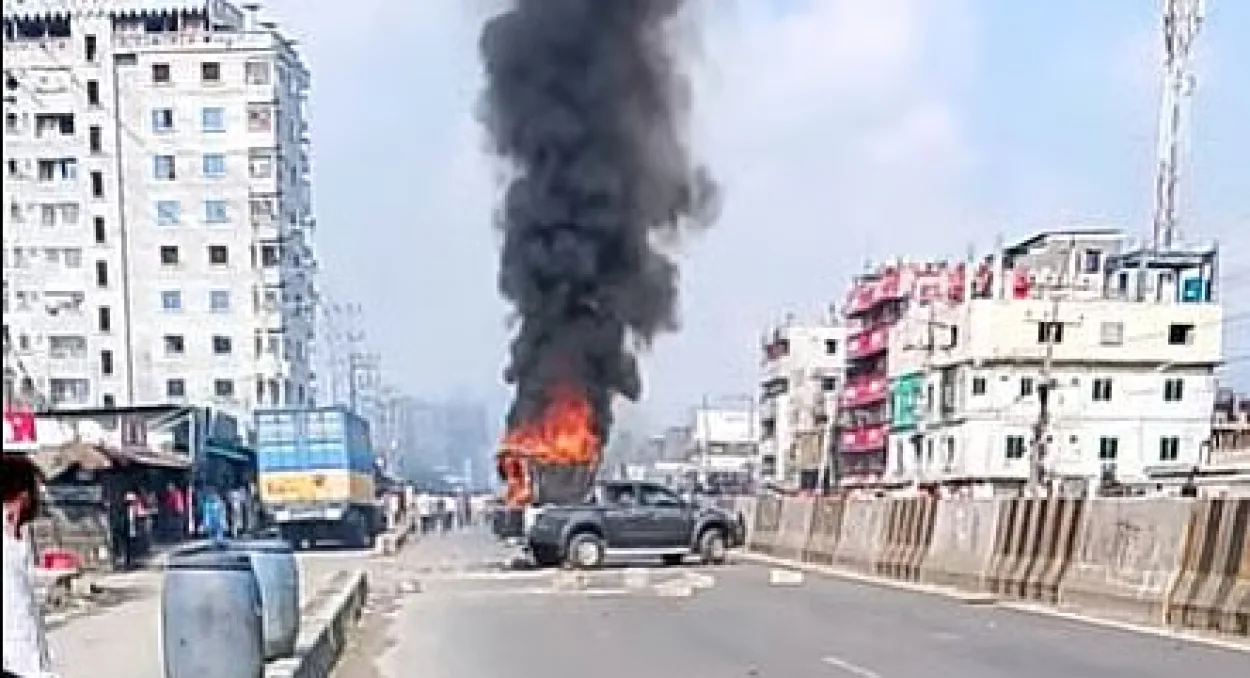
Garment factory workers staged fierce demonstrations and blocked the Dhaka-Tangail highway in Gazipur on Sunday (Sept 29) morning, demanding a minimum monthly wage of 30,000 Taka, triggering widespread violence, clashes with law enforcement, and a traffic standstill that lasted nearly six hours. The protests, which commenced around 9:00 AM, paralyzed major industrial and transit hubs including Chandra, Palli Bidyut, Safipur, and Mouchak in Kaliakair Upazila, alongside Konabari, Bogra, and Naoraur areas within the Gazipur Metropolitan territory. The blockade trapped numerous long-distance buses and cargo trucks, causing immense suffering to commuters and transport workers before traffic movement gradually resumed at approximately 3:00 PM.
The escalating unrest saw widespread vandalism, arson, and running street battles as hundreds of workers flooded the thoroughfares. During the melees, a police box near the Konabari area was set ablaze, while a police vehicle and a waste-jute warehouse belonging to Tropical Limited in the Chandra Palli Bidyut locality were torched by afternoon. Industrial and local police personnel deployed tear gas shells and sound grenades to disperse the stone-pelting crowds after repeated efforts to clear the highway failed. At least 25 workers sustained injuries during the pitched battles and received medical attention at local clinics.
Journalists covering the unfolding unrest also became targets of violence. Three media personnel—Jehangir Alam, Gazipur correspondent for Deepto TV; Abu Sayed, Kaliakair correspondent for NTV; and local photojournalist Riajul Islam—were physically assaulted and injured while collecting news and capturing visuals in the Palli Bidyut area. The wave of labor discontent prompted authorities to declare holidays for over 50 apparel manufacturing units across Gazipur to avert further escalation, though workers streaming out of these factories quickly swelled the ranks of the demonstrators on the streets.
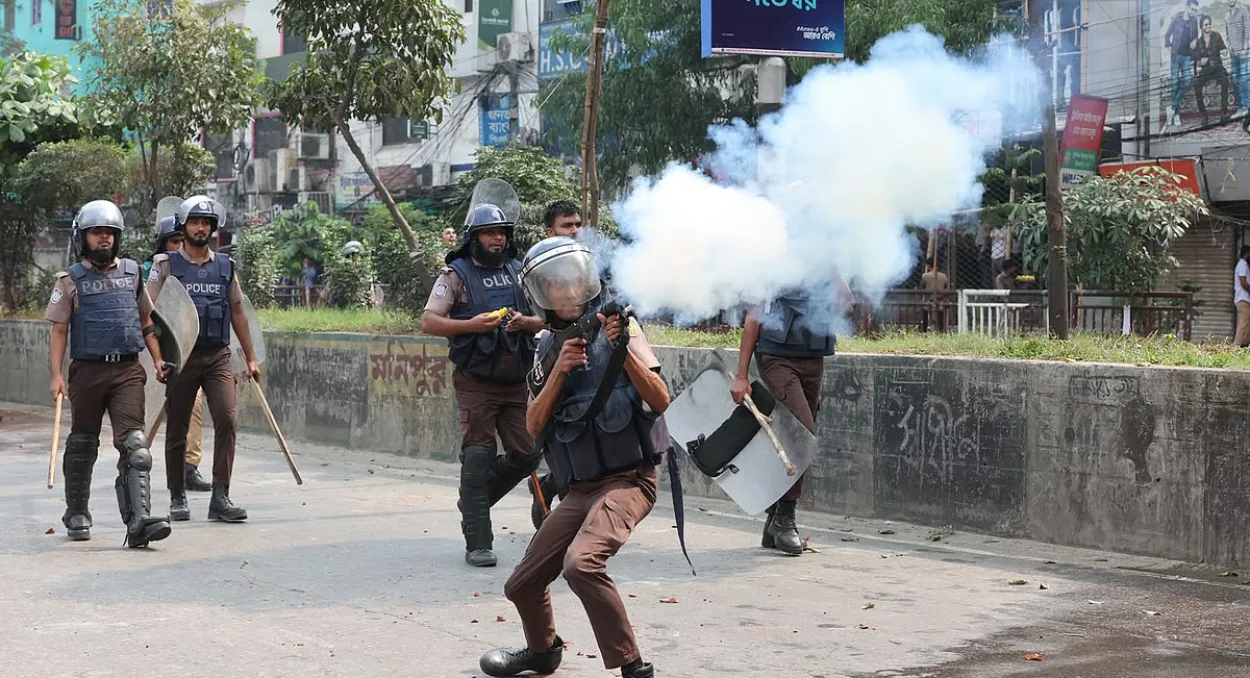
Protesting workers voiced severe economic distress, pointing out that spiraling commodity prices have made survival on current wages nearly impossible. Mohammad Khairul, a worker at Divine Textile, stated that skyrocketing house rents, food costs, and medical expenses have pushed families to the brink, leaving them with no alternative but to take to the streets demanding a living wage. The unrest follows similar demonstrations on Saturday (Sept 28), when workers blocked the highway around Chandra Palli Bidyut and the Ansar Academy, leaving at least 30 people injured and roughly 15 vehicles vandalized amid sudden closures of about 20 factories.
To manage the volatile security situation, local administration deployed five platoons of Border Guard Bangladesh (BGB), alongside reinforced contingents of industrial and regular police. Gazipur Superintendent of Industrial Police Md. Amzad Hossain reported that five to six vehicles were vandalized during the protests, though the origin of the warehouse fire remained unverified. Meanwhile, the government announced the formation of a six-member minimum wage board for garment workers at noon, a development that had not yet reached the protesting crowds. Lawmaker Md. Mujibur Rahman subsequently visited the restive areas of Bogra, Naoraur, Konabari, Safipur, and Chandra, engaging directly with the workers and urging them to vacate the highway by assuring them that the newly formed board would address their wage expectations.


