The government started the journey with three types of burdens, there is no visible improvement: Hossain Zillur

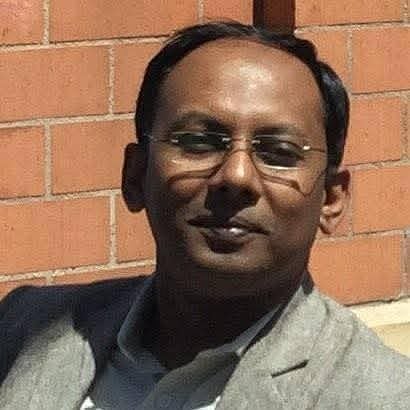
Chairman of Power and Participation Research Center (PPRC) and former caretaker government advisor Hossain Zillur Rahman commented that the current government has started its journey with three types of 'burdens'. According to him, the government has to juggle the succession crisis, global energy volatility and the party's commitment to meet public expectations.
Hossain Zillur Rahman said this in a webinar titled '3 months of the new government: an initial review' on Saturday afternoon. PPRC organized this discussion held on online platform Zoom.
Regarding the burden of inheritance, Hossain Zillur Rahman said, due to the long authoritarian rule, the country's institutional and economic wounds have deepened. During the interim government there was a significant deficit in performance. As a result, the burden of succession on the new government increased.
The former adviser also highlighted the geopolitical reality. He said that the energy crisis has intensified due to the aggression of the United States and Israel on Iran. This has an impact on import-dependent economies like Bangladesh. Regarding the government's election pledge, he said, the new government has prepared the manifesto for a long time. There is a philosophy called 'Bangladesh First'. But how much that philosophy is reflected in reality is now a matter to be seen.
Expressing concern about the law and order situation in the country, Hossain Zillur Rahman said that the reality of the visible improvement of the situation has not yet been created. A culture of impunity also remains. Although some steps have been taken for an independent judiciary, 'mixed signals' are being received regarding the abolition of the Supreme Court Secretariat. He commented that what structure the government is bringing instead is also important.
The former adviser pointed out that the country's civil discourse should move away from emotion-driven politics towards evidence-based analysis and constructive public engagement. He also cautioned against the culture of giving various 'tags' to political opponents for negative purposes.
Hossain Zillur Rahman also mentioned that if the elected government is successful, it will be positive for all the citizens of the country. He said that it is everyone's responsibility to improve the present by learning from the mistakes of the past. Building national consensus is not the sole responsibility of the state; Strengthening national unity through dialogue with civil society and business partners and creating pressure for evidence-based accountability on the government.
He is in favor of giving the government some more time to understand the overall picture of where the country is going or is likely to go.
Speakers who participated in the webinar said that after the change of government, people had high expectations. However, visible progress in institutional depoliticization, law and order reform, investment climate development and strategic geopolitical positioning remains uneven.
Chairman of Osmani Center for Peace and Security Studies Lieutenant General (Retd.) Mohammad Mahfuzur Rahman said that there are some geopolitical challenges in front of the current government. Before coming to power, there should have been a mention of what the government's policy would be on the Rohingya crisis, border killings, water issues. Three months is not much time, but the government's priorities in the security sector should have been highlighted. The government can still inform that.
Meanwhile, former ambassador Sufiur Rahman pointed out that there has been a trend of blaming the previous government in the last three months. He said, through this accusation, the government is looking for an excuse not to act. According to him, the main crisis of the current government is not the mandate; They lack capacity and implementation skills.
Former president of BKMEA Fazlul Haque said that the government has taken the responsibility of running the country in a difficult situation. Rising oil prices have pressured buyers around the world. Consumers are tightening budgets. He said considering the global situation, the government should be given another three months.
Regarding the next budget, Fazlul Haque said that if the current government gives a contractionary budget, it will be a bold move. Government's revenue target of Rs 7 lakh crore will not be met. There is also a possibility of debt increase. In this case, the government will have to take a loan again.
Participating in the discussion, lawyer Jyotirmoy Barua said, there was a fear of mob violence during the interim government, the current home minister said that mob violence will not be tolerated; However, it continues in various forms. There is no pattern of strong position of the government either.
This lawyer complained that police reforms were talked about but nothing happened. He said, the morale of the police has not yet fully recovered. He felt that the secretariat was needed for the independence of the judiciary by amending the ordinances issued by the interim government.
Negotiators acknowledged that the government had to take responsibility in a difficult context, but stressed that the coming months should move away from the politics of blame and towards practical reforms, institutional accountability, meritocracy and strong policy guidance.