Cultural events are decreasing due to fear and pressure, artists are in uncertainty

135 obstacles in cultural events in 15 months.
Out of 205 Yatradals, 40-50 are active.
A large part of the rural folk festival has ceased in two decades.
Digital entertainment is also reducing field-based arrangements.
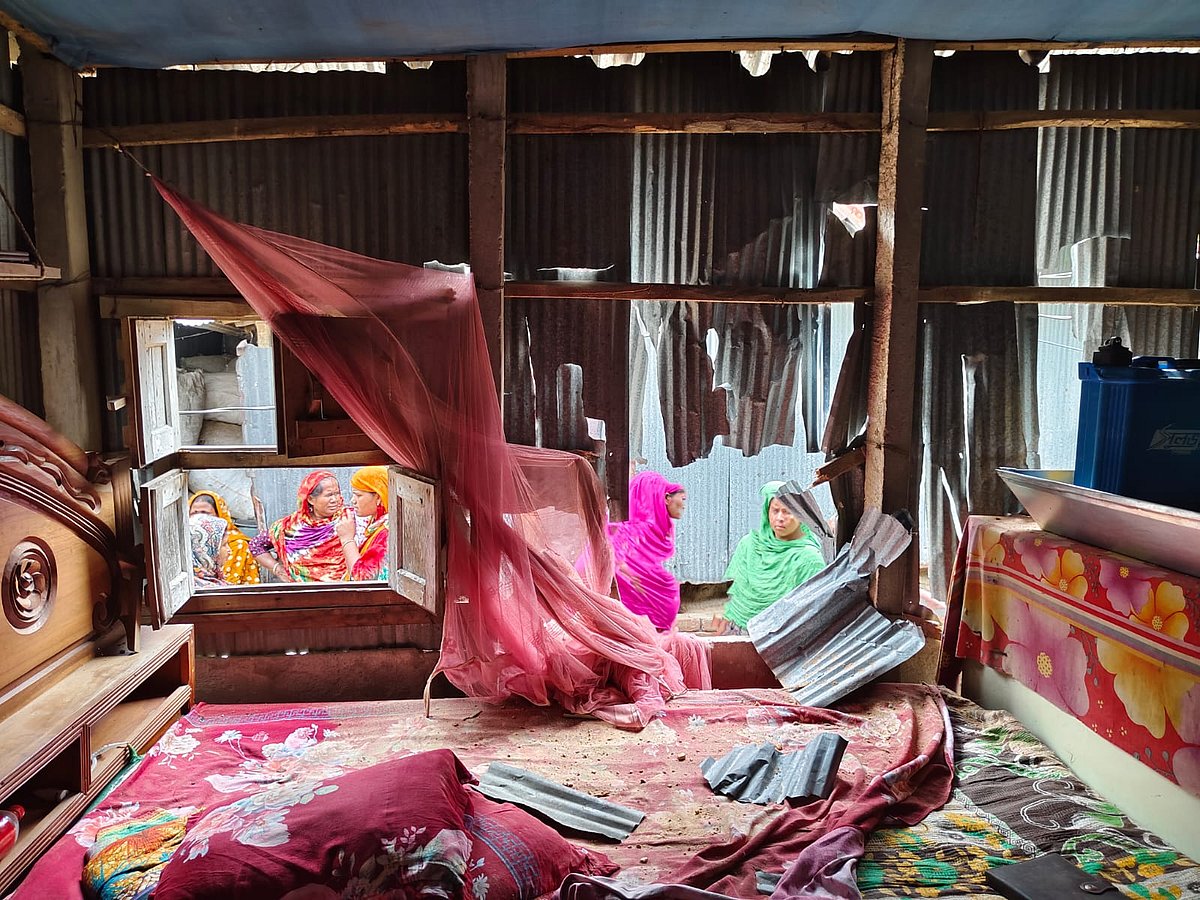
Ibrahim Shah Shrine of Viswanath in Sylhet. Bowlgans have been organized near the shrine for hundreds of years. This year also started the music festival. Suddenly hundreds of people came to the stage and attacked. Musical instruments, sound instruments and audience chairs were vandalized. In this attack on the night of March 22, the centenary traditional song event was canceled in a few minutes. The attackers also threatened to take strict action if the music festival is organized in the future.
This image of Vishwanath is no longer just an isolated incident, but has become a daily reality around the folk culture of rural Bengal. In recent years, such incidents on folk festivals and cultural events of rural Bengal are gradually increasing. Many festivals are gradually disappearing. Cultural events are decreasing.
Yatrapala, puppet dance, baulgan, palagan—these were once important forms of rural entertainment. Although there are no specific statistics, field level information shows that in the last two decades, the regular organization of such folk culture festivals in rural Bengal has stopped significantly. Folk music and folk drama are now largely confined to special events or government patronage.
Incidents like attacks, obstructions and social pressure have played a major role in reducing the scope of rural cultural festivals and events, artists and organizers said. In recent years, there have been complaints from various local individuals, organizations, parties and administrations of creating obstacles whenever they go to perform a function somewhere.
A look at the statistics gives a picture of the cultural milieu as a barrier. According to the information of a branch of the police, 135 such incidents have been reported in the last 15 months. Out of this, 94 incidents occurred from July to December last year. And 16 incidents happened from January to March this year.
Talked about this with bowler Arif Dewan. He sang the song 'Ma Lo Ma'. His family has been practicing folk culture for more than two centuries in Keraniganj, Dhaka.
Arif Dewan said, there was no such obstacle in the practice of folk culture for a long time after independence. However, later on, a conflict-oriented trend has been created through various incidents including attacks on shrines, attacks on cultural events, which has also affected the folk culture. A radical opportunist group is doing these things. But in all cases external obstacles are not the only reason. The 'propaganda-centricity' and disregard of religious sensitivities by some artists also creates problems.
The concerned persons say that the cultural events have been decreasing relatively since the end of the 15 and a half year regime of the Awami League government, which banned the activities. After the overthrow of the Sheikh Hasina government in a student-led coup, the impact on rural folk culture programs increased significantly when the interim government took over. Such incidents are happening even after the formation of BNP government. Such events are declining due to attacks, obstructions and lack of folk culture practices. However, the spread of digital entertainment is also considered by some to be one of the reasons for the decline of cultural events.
Taking the Yatrapala account as an example gives a picture of the shrinking of rural arrangements. According to the Bangladesh Jatra Industry Development Council, the number of Jatra teams registered in Shilpakala Academy is now around 205. However, 40-50 groups actively participate in regular activities. At one time there were 20 to 50 yatrapalas a season across the country, where multiple groups took turns performing each day in the month-long fair. Now that image is almost non-existent.
Lakshmi Vanikar, who has been involved in Yatra since the age of four, has a voice of despair. He has been working in Yatrapala for almost 34 years. Father was a tour manager, mother was a dancer. He told Prothom Alo last Saturday, "There were 50-60 days of work in a year for several years. And in my childhood I used to get 100 to 150 days of work. Now if you get a job for one or two days a month, you are lucky. I have been attacked in many places. Incidents of attacks and setting fire to pandals have also taken place here and there. The situation is the worst in the last one and a half years, he said.
Jatra Shilpa Development Council, an organization of artists and craftsmen involved in Jatra Shilpa, said that the number of artists directly involved in Jatra Shilpa is 7 to 8 thousand. Out of this, 5000 are professional journeymen and 2-3000 are irregularly involved in this profession as amateurs or hobbyists. 40,000 to 50,000 people depend on this industry for their livelihood. But many people are spending their days in uncertainty due to reduced arrangements. As a result, new artists are not coming into the profession, old ones are also leaving the profession.
Belayet Hossain, president of Bangladesh Jatra Industry Development Council, told Prothom Alo that, despite applying to the local administration for half a century, permission was not received in many cases. Even if permission is granted, there are various obstacles. As a result, field-based major events have almost stopped. Artistes are trying to survive somehow by participating in small events, temple-centric palas or seasonal events at the local level.
The same is the case with folk music. Banglapedia, the national encyclopedia of Bangladesh published by the Asiatic Society, says that there were about half a hundred types of folk music in Bangladesh depending on the region. The people concerned said that the popularity of hundreds of songs such as Jari, Sari, Bhatiali, Bhaviya, Murshidi, Marfati, Baul, Gambhira, Kirtan, Ghatu, Jhumur, Bolan, Alkap, Leto, Gajan, Barmasi, Dhamali, Patua, Sapude, Khemta etc. is gradually decreasing.
In these songs, on the one hand, people's lifestyle, as well as spiritual thoughts are reflected. In the words of the song, the feelings and experiences of the inner world of the nation are identified. Although some songs have religious sentiments, most songs are mainly performed for entertainment. Again, songs like Khemta, Patua and Sapude are in many cases directly connected with the livelihood of artists. The sentiments, desires and social experiences of women are clearly reflected in genres such as Maeili Geet, Saheli Geet and Hudma Geet.
However, with the change of time, these regional songs are no longer the same. For example, let's talk about bowl guns. The United Nations Educational, Scientific and Cultural Organization (UNESCO) listed the Baulgan in Bangladesh as part of the Intangible Cultural Heritage of Humanity in 2008. But Baulgan is also in trouble now.
Manikganj district is one of the pilgrimage places for folk music including Baulgan. According to the national information, Manikganj's rural life is full of Zarigan, Sarigan, Bichergan, Kabigan, Baulgan, Murshidi, Marfati, Gazi's song, Gajon song, Behula song, Dhuagan, Permasi Geet, Mehndi Tolar Geet, Wedding song, Ghetu song, Morsia, Panchali, Onni song, Frog's wedding song etc. Even two to three centuries ago, there was a lively folk music festival in the courtyards, fields and under the shade of banyan trees in the rural town of Manikganj.
But that image of Manikganj folk culture is now lost. Saidur Rahman Bayati, one of the senior folk artists of the district, talked about this. He was born in 1932. He started singing at the age of 10. He said that even before the independence of the country, there were 200-250 good quality artists in Manikganj district. Gradually that number has reduced to a handful now.
Saidur Rahman Bayati said, "Once baul and folk music was a matter of pursuit and philosophy, but now it has become a profession and a business." Today many people identify themselves as Baul, but they have nothing in common with the real Baul lifestyle, philosophy and practices. As a result, the spirituality and depth of the song has decreased, people's interest is also decreasing.
Not only in the plains, but also in the hills, cultural activities have declined. Prothom Alo's Bandarban representative said that since 2018, the Rajpunyah festival of the hilly region has been closed since 2018. Collection of rent from Jumchashi subjects, festivals like annual gatherings were held.
Similarly, the Chiasad Pai or cow-slaughter festival of the Mrods is now almost extinct for the sake of family prosperity. The Marma community's ballads 'Jyat' and 'Kapya', which were mainly based on mythological stories, were regularly organized in almost every neighborhood even 30 to 40 years ago. Currently these events are no longer seen.
Similarly, the traditional 'Garaiya' drama festival of the Tripura community is not as spontaneous as it used to be. It is now restricted to formal or institutional arrangements. The 'Genghuli' Palagan gathering of the Chakma community is also almost disappearing. Once upon a time the singers of this Palagaan used to play the violin throughout the night and the audience would enjoy it enthralled throughout the night.
On the other hand, the 'Sheyakidong' or hunting festival of the Bom community and the war dance festival of the Khumi community are now rarely seen. These traditional cultural practices are gradually disappearing due to the change of time, social transformation and lack of organization, said the concerned persons.
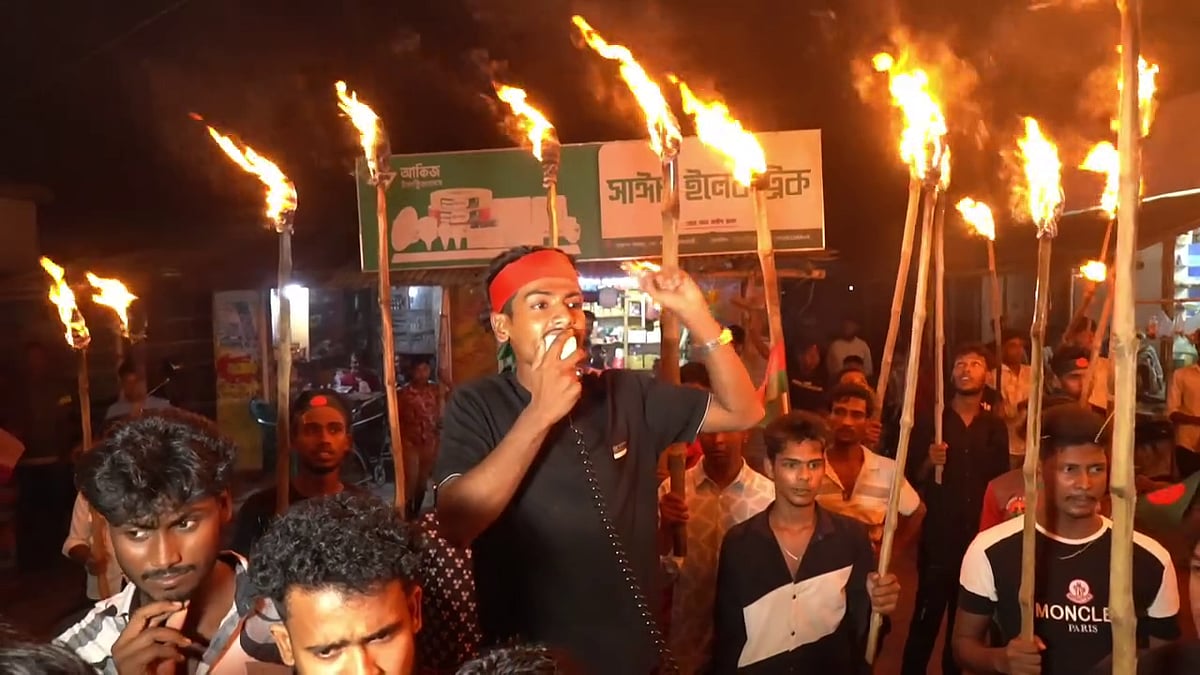
People concerned said that most of the rural cultural activities are being obstructed in the name of 'Tawhidi Janata'. Many a times these programs are stopped due to allegations of promoting obscenity and hurting religious sentiments. Sometimes it is seen that the local administration stops the program instead of solving the problem.
For example, in April last year, on the occasion of Chaitrasankranti and Payala Boishakh, the capital's Mahila Samity Auditorium was supposed to show the last poem drama produced by the drama group Prangnemo for two consecutive days. After finishing all the preparations, the actors were waiting to go on stage. But after receiving threatening letters from 'Tawhidi Janata', the performance of the play was cancelled.
According to a police wing count, at least 11 cultural events have been stopped under the banner of Tawhidi Janata alone in the last 15 months. 36 events have been blocked due to allegations of religious blasphemy. Apart from this, there have been incidents like vandalism, obstruction of the Baulgun ceremony and vandalism of the Shaheed Minar due to the staging of the play.
Artists and artisans said that there have been incidents of obscenity in some cases around the organization of the Yatrapala. Again, there were misunderstandings about various religious matters in a couple of cases. But there is a tendency to blame it on the entire industry.
A woman traveler who did not want to be named, shared her experience and said that the travel environment started to deteriorate rapidly after 2012-13. Organizers kept forcing artistes to dance openly. Girls were brought from outside just to dance outside the artists. Thus obscene dance entered the journey. This seriously damages the reputation of the real artists. He was forced to give up dancing due to fear of infamy. He feels that the Yatra industry would have survived if the obscenity had been stopped and a good working environment had been created for the real artists.
Again, various criminal activities around the festivals are threatening such events. On March 31, such an incident took place in Matlab Uttar Upazila of Chandpur. Miscreants hacked and injured Matiur Rahman alias Lal Mia (60), the Khadem (servant) of the shrine of Saint Hazrat Shah Solaiman (Rahd) alias Lengta Baba during a seven-day long fair. Matiur Rahman told Prothom Alo that he was cut and bloodied for stopping him from taking drugs and gambling.
In addition to such incidents, opposition from local dominant groups to maintain control and dominance, ignorance or unawareness of the historical value of folk culture and at some places political reasons are also preventing.
For example, on October 7 last year, a group of people went to block the event organized on the occasion of the 163rd birth anniversary of music master Ustad Alauddin Khan by 'hearing the news of dancing and singing'. Later they were informed by Shilpakala Academy that there will be a program of Ustad Alauddin Khan, not dance and song. Hearing that, they left.
What kind of obstacles artists face in cultural events including stage plays, came out in the speech of dramatist Polly Parveen. This member of Natya Dal Arshinagar said that in recent times, scripts have to be submitted in advance to get administrative permission for staging plays in many places. In Mymensingh, threats of mobbing have come even after getting permission to submit scripts like this. Later, the play had to be cancelled.
"An atmosphere of fear has been created"
Artists and organizers say folk culture is not just entertainment; It holds the memory, belief and identity of the rural community. But under the pressure of attacks, obstruction, social pressure and administrative inaction, that continuity is breaking down. The field is empty, the stage is extinguished, the artists are leaving the profession.
Samina Lutfa, professor of Sociology Department of Dhaka University and drama activist, told Prothom Alo that the conflict of cultural values is behind the increasing attacks and obstacles on folk culture. Bangladesh's traditional culture was multidimensional and inclusive, but in recent times that trend has come into conflict with different religious and social perspectives. In particular, the conflict between rural culture based on Sufi tradition and new religious interpretations is taking the form of attacks on shrines, ors or folk arrangements in many cases. Added to this is the occupation of space, dominance and political interests, resulting in an atmosphere of fear.
A number of attacks during the interim government were not effectively suppressed, fueling the violence. Commenting on this, Samina Lutfa said that although the current government is expected to strengthen the rule of law to stop attacks, in reality, the match between words and actions is still not clear. If the state is not active, this atmosphere of fear will not end in the cultural sphere.
Source: Prothom Alo Bangla