



Remote Riverine Communities Face Critical Obstacles in Maternal Healthcare Access
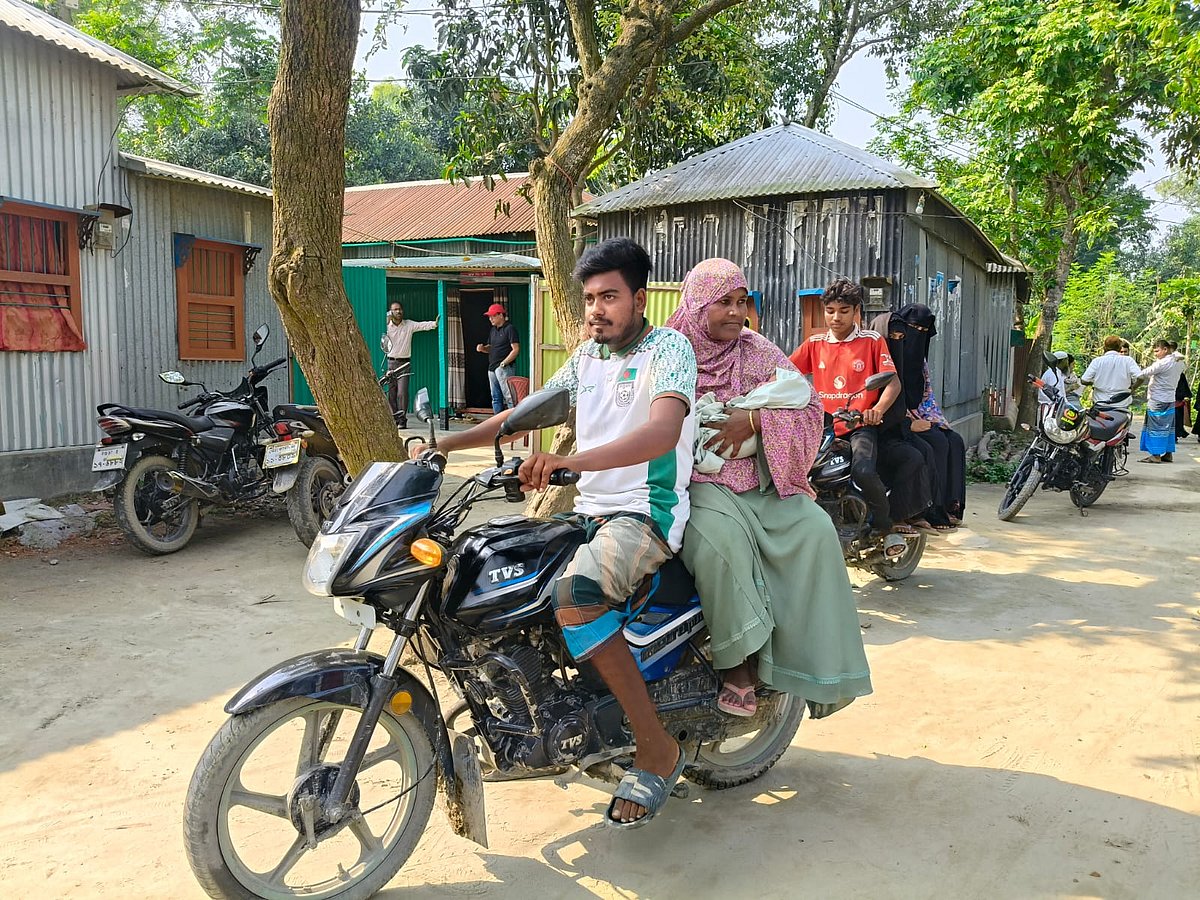
Photo Collected
In the remote char regions of Bangladesh’s Sirajganj district, childbirth remains a perilous journey. For women in villages like Borongail, the lack of infrastructure means that labor often begins on rickety boats or rugged motorcycle rides across muddy farmland. Midwife Anowara Khatun, who has assisted in over 500 home births during her 40-year career, describes these incidents as a grim reality of life in the inaccessible riverine landscape.
The struggle is highlighted by the experience of residents in the Ghorjan Union, where more than 31,000 people reside without a permanent government health facility. To reach medical care, expectant mothers must endure a 45-minute boat ride across the turbulent Jamuna River, followed by a taxing motorcycle commute over uneven terrain. For many, this journey is prohibitive, leading families to opt for traditional home deliveries despite the significant medical risks.
বিজ্ঞাপন
Data from the Bangladesh Bureau of Statistics indicates that, nationally, approximately 33 percent of births still occur at home. Research published in *PLOS One* notes that home birth rates in various divisions across the country remain 10 to 20 percent higher than the national average, a trend driven by high illiteracy, limited economic agency for women, and the physical distance to healthcare centers. In the Ghorjan char, these systemic barriers are compounded by cultural norms where the decision on where to deliver is frequently dictated by family members rather than the mothers themselves.
Until the recent establishment of a primary healthcare center by the non-governmental organization BRAC, the region was entirely devoid of formal maternal health services. While the new center provides a vital lifeline, it is limited to normal deliveries. In cases of complications requiring surgical intervention, patients must still attempt the hazardous journey to upzila-level hospitals, a path that has historically led to tragic outcomes.
বিজ্ঞাপন
Medical professionals point to a lethal combination of factors: early child marriage, late-age pregnancies, and poor obstetric hygiene at home—such as the use of unsterilized blades and cloths—which significantly heighten the risks of postpartum hemorrhage, fistula, and infections. Dr. Jannatul Ferdous, who visits the BRAC center weekly, emphasizes that the strenuous travel required for basic check-ups is incompatible with the medical needs of high-risk pregnancies.
As the nation marks National Safe Motherhood Day, the situation in Sirajganj’s char lands remains a stark reminder of the rural-urban health divide. While local health workers continue efforts to educate families on the importance of institutional births, the lack of government personnel on the ground leaves a void that underscores the vulnerability of mothers living in the country’s most isolated geography.
0%
0%
0%
0%


