



Hill tract farmers observe traditional Alpalni festival to honor nature and agriculture
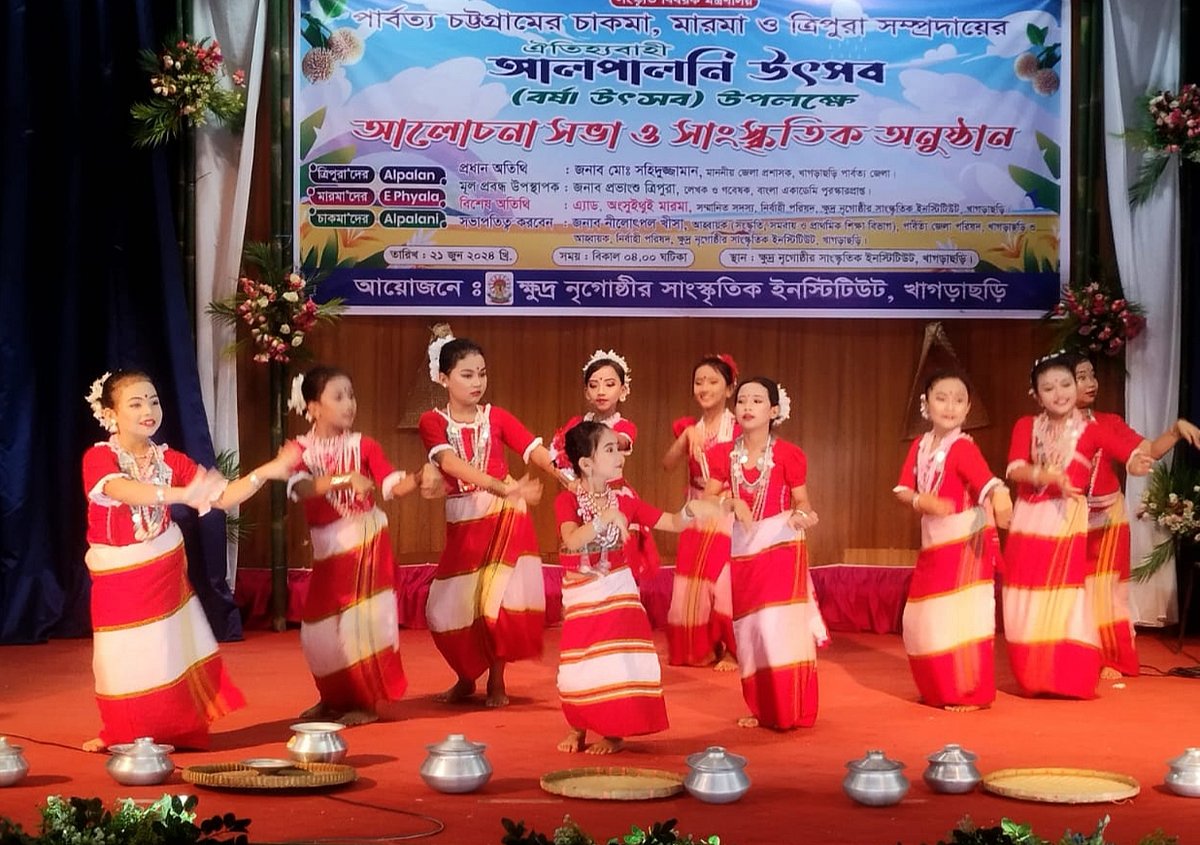
Photo Collected
Farmers across the three hill districts of the Chittagong Hill Tracts observed “Alpalni” on Sunday, a traditional festival dedicated to honoring the elements of nature and seeking a bountiful harvest. Observed annually on the seventh day of the month of Ashar, the festival serves as a day of rest for the region’s indigenous shifting and plow farmers.
The term “Alpalni” stems from the Chakma language, where “al” translates to cultivation and “palni” refers to observation or abstinence. Known as “Ifaihla” among the Marma community and “Halupulung” to the Tripura, the festival dictates a complete cessation of agricultural labor. Participants refrain from using tools such as axes, sickles, or hoes, and strictly avoid cutting trees, bamboo, or vegetation, effectively allowing the forest a day of respite.
বিজ্ঞাপন
The rituals reflect a profound connection to the environment. Farmers offer prayers to the earth, water, sky, and sun, often beginning with offerings to the goddess Lakshmi. Traditionally, families prepare feasts—consisting of rice, vegetables, fruits, and flowers—and present them on rooftops for the sky, in courtyards for the earth, and along stream banks for the water. Agricultural implements are meticulously cleaned and blessed, while livestock, including chickens and pigs, are sacrificed as part of the ceremonial devotion.
Elderly community members describe the festival as a gesture of gratitude toward the nature that sustains human life. Historically, Alpalni was a widespread and festive occasion, with affluent families hosting relatives and dignitaries for communal meals. However, as traditional shifting cultivation has declined and rural livelihoods have shifted toward other sectors, the festival’s prevalence has diminished. In many areas, it has transitioned from a mandatory agricultural tradition to a symbolic cultural event.
বিজ্ঞাপন
While the practice is waning in more accessible regions, pockets of the Chittagong Hill Tracts continue to uphold the tradition. Swadesh Priti Chakma, headman of the Maischari Mouza in Khagrachari’s Mahalchari upazila, noted that while the festival is no longer universal, farmers in remote, inaccessible areas continue to observe the rituals faithfully.
In an effort to preserve the heritage, institutions like the Khagrachari Tribal Cultural Institute have taken up the mantle of organizing the event. Director Nhohlamaung Marma stated that the institute has been hosting Alpalni festivities for several years to ensure the tradition remains a part of the region’s cultural fabric, with celebrations scheduled for the coming week.
0%
0%
0%
0%


