



Discrepancies in July Uprising Death Toll Fuel Calls for Definitive Accounting
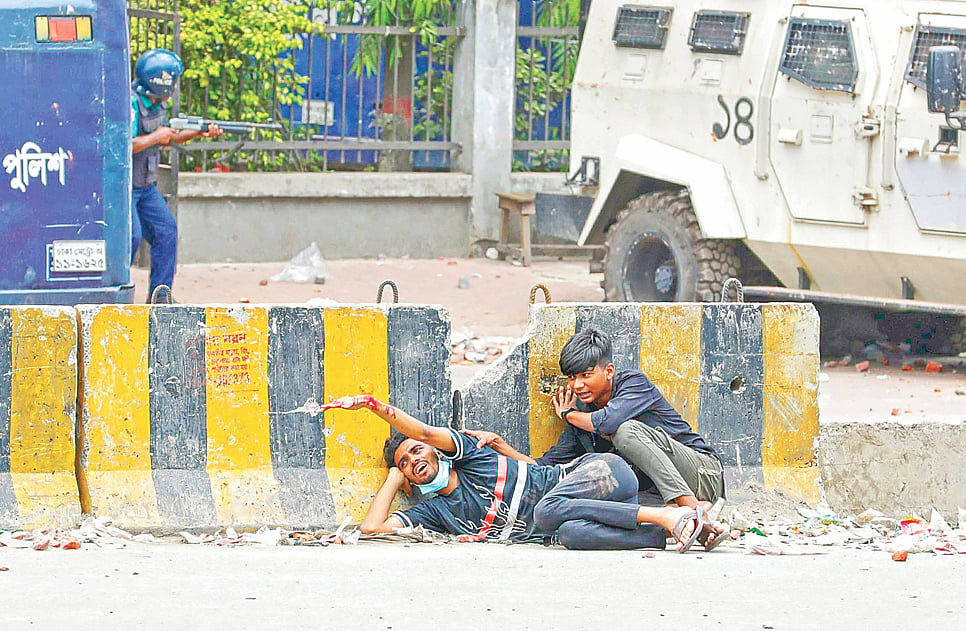
Photo Collected
Determining the precise death toll of the July uprising that led to the ouster of Sheikh Hasina’s government remains a point of significant confusion, with conflicting data emerging from government agencies, political factions, and independent organizations months after the transition of power.
The movement, which began in early July 2024 as a student-led protest against civil service quotas, evolved into a nationwide mass uprising that culminated in the fall of the Awami League administration on August 5. In the aftermath, the interim government established the July Mass Uprising Directorate to preserve the history of the struggle, manage medical support for the wounded, and finalize the official list of casualties.
বিজ্ঞাপন
According to government gazettes issued by the Ministry of Liberation War Affairs, the official count of martyrs has fluctuated due to rigorous verification processes. The list, which initially stood at 834 in January 2025, rose to 844 following additions in June, before being pruned by the removal of duplicate entries and individuals determined not to have been directly involved in the protests. Recent data from the July Mass Uprising Directorate places the official count at 843 martyrs, with 14,370 individuals registered as wounded. Officials note that further adjustments are possible as verification continues, though some families remain concerned that missing person reports have yet to be fully reconciled.
The discrepancy between official figures and informal estimates remains stark. While the government gazette holds the count at 843, various political leaders and advocacy groups have cited casualty numbers ranging from 1,500 to several thousand. Notably, a report by the United Nations Office of the High Commissioner for Human Rights (OHCHR) suggested that the death toll during the intense period between July 15 and August 5 could be as high as 1,400.
বিজ্ঞাপন
These varying figures have complicated the government’s efforts to provide compensation and maintain historical accountability. Professor Anu Muhammad, a prominent intellectual involved in the movement, has urged the government to resolve these discrepancies by cross-referencing domestic data with international findings, emphasizing that an accurate record is a matter of state responsibility and public trust.
The July Shaheed Smriti Foundation, a non-political body established to support the victims, currently lists 835 names on its website, though its homepage cites a figure exceeding 820. Simultaneously, organizations such as the July Revolutionary Alliance have claimed that the actual death toll exceeds 1,500, even as they struggle to maintain their own comprehensive databases.
Addressing the ongoing delays, Mohammad Anwarul Naser, Director General of the July Mass Uprising Directorate, acknowledged that the verification process was temporarily suspended due to administrative circulars. He indicated that a committee led by the Minister for Liberation War Affairs has been formed to review these policies and expedite the finalization of the lists, though no firm timeline for the completion of the records has been established. Amidst staffing shortages and pending applications from the wounded, the directorate remains under pressure to provide a definitive account that can withstand historical scrutiny.
0%
0%
0%
0%


