



Bangladesh Pushes to Elevate Jackfruit from Peasant Staple to Global Export Commodity
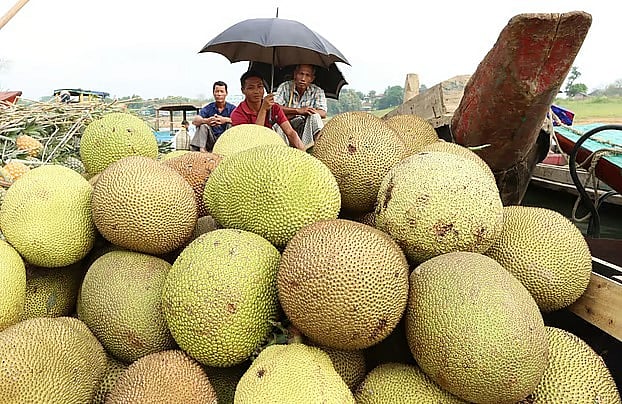
Photo Collected
Long relegated to the margins of culinary prestige—often shunned by the urban elite who favor the seasonal fanfare of the mango—the humble jackfruit is finally emerging as a significant economic and nutritional powerhouse. While it has traditionally served as a survival staple for the rural poor across the Indian subcontinent, recent international interest, including from China, has prompted a strategic reappraisal of the fruit’s potential to diversify Bangladesh’s export market.
The fruit’s cultural complexity was famously satirized in the 2023 Netflix dark comedy “Kathal: A Jackfruit Mystery,” which mirrored, in fiction, the peculiar way the fruit occasionally drifts into political discourse. In late 2022, amidst a cost-of-living crisis, the former government faced public backlash after suggesting that citizens substitute meat with jackfruit. The proposal was widely mocked as an attempt to deflect from failing economic policies. However, under the current administration, the narrative has shifted toward industrial utility. During a recent agricultural exhibition in Dhaka, Minister of Agriculture Mohammad Amin-Ur-Rashid emphasized the fruit’s nutritional density, citing its potential in processed forms like kebabs, chops, and pakoras.
বিজ্ঞাপন
Despite its nutritional profile—rich in protein, vitamins, and dietary fiber—the jackfruit faces a branding crisis among the urban middle class. Its pungent aroma and the labor-intensive process of extracting the fruit, which often leaves one’s hands sticky with sap, have fueled a long-standing disdain. Yet, this “armored” fruit offers far more than its cumbersome exterior suggests. For rural populations, it is an essential seasonal caloric bridge. From the tender *echor* (green jackfruit) curries to the consumption of its seeds as a protein-rich vegetable substitute in soups and stir-frys, the fruit is a model of zero-waste sustenance.
The historical resilience of the fruit was particularly evident during Sri Lanka’s 2022-23 economic collapse, where it served as a critical safeguard against hunger for thousands. Bangladesh finds itself in a similar position of reliance; the fruit provides vital nutrition to the agrarian populace throughout the summer and monsoon seasons.
বিজ্ঞাপন
As the world’s second-largest producer of jackfruit, trailing only India, Bangladesh is now looking to close the export gap. While India exported over 26,000 metric tons in the 2023-24 fiscal year, Bangladesh exported barely over 2,000 metric tons. Industry experts point to Thailand as the blueprint for success: by pivoting from selling raw fruit to exporting high-value processed goods—such as chips, canned segments, and meat alternatives—Thailand generates approximately $760 million annually from jackfruit.
With a memorandum of understanding recently signed with China to explore export opportunities, the prospect of the jackfruit ascending to a global commercial commodity is gaining momentum. For a fruit that has long been dismissed as “the poor man’s food,” the path to international markets depends on the country’s ability to innovate beyond the orchard and into the processing plant. If successful, the fruit that once served as a symbol of economic despair may soon become a cornerstone of the nation’s agricultural export identity.
0%
0%
0%
0%


