

Income tax should also be paid in the mountains, the letter of four parliamentarians expressing concern

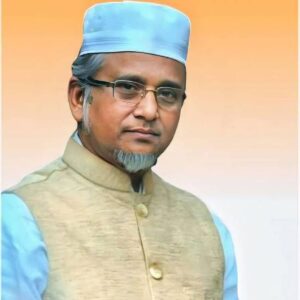
Photo Collected
A proposal was made in the budget session to remove the income tax exemption on minority ethnic groups in the three hill districts of Rangamati, Bandarban and Khagrachari. This has caused concern among people of different classes and professions in the region. If this benefit is withdrawn, the people of the minority ethnic groups will be left behind economically. Four MPs from three hill districts have also written to the Finance Minister.
It is known that in the budget session, the issue of income tax exemption of minority ethnic groups has been proposed in the Finance Bill for amendment and submitted to the Parliament. If the proposal is passed by the Parliament, all incomes other than salary and income from financial assets (bank deposits, savings cards etc.) of people belonging to ethnic minorities will come under income tax. That is, they have to pay income tax. At present, according to Section 19 of the Sixth Schedule of the Income Tax Act, 2023, all types of economic activities conducted in the hilly areas are enjoyed by minority ethnic groups free of income tax.
বিজ্ঞাপন
Petitioning the finance minister to maintain the income tax exemption facility, four members of parliament said that income tax exemption facility has been provided in the sixth schedule of Income Tax Ordinance 1984 and Income Tax Act 2023. According to the law, the income of any natural person belonging to the ‘tribals’ of Rangamati, Bandarban and Khagrachari hill districts, arising solely from economic activities carried on in the hill districts, shall be exempt from income tax.
Members of Parliament said that among the country’s 1.65 million ‘tribes’, the majority of 989 thousand 298 people of Chittagong Hill Tracts are engaged in jum farming and agriculture. 70 percent of the agricultural land in the region has been submerged due to the Kaptai Dam. Most of the affected people are ‘tribals’. Apart from this, there are a small number of shopkeepers and about five thousand government employees. Still 37 percent of the hill dwellers are out of reach of clean water, 45 percent without electricity and 50 percent without sanitation facilities. Overall 80 percent of the hills are socio-economically backward. In this situation, they should continue to benefit from income tax exemption. They said that in this election, BNP candidates have won in the hilly areas with a large number of votes. Removal of income tax exemption will adversely affect future national and local elections. For this, the members of parliament proposed to amend the law by maintaining the income tax exemption.
বিজ্ঞাপন
In the Income Tax Act of 1922 during the British colonial period, the people of ethnic minority groups were enjoying income tax exemption across the country. But in the amended Income Tax Ordinance of 1984, they are exempted from income tax only on economic activities conducted in Chittagong Hill Tracts. The 2023 Act has retained the benefits provided by the 1984 Ordinance.
Bangladesh Bank’s former general manager Mankyashoenu Nevi, High Court lawyer Pratikar Chakma expressed concern over the move to withdraw income tax exemption. They said that Chittagong Hill Tracts is a backward area since colonial times. Even after the independence of Bangladesh, the turbulent situation that has been going on for decades has prevented the people of the small ethnic groups of the region from moving forward on an equal footing with the rest of the country. After the mountain peace agreement, they are trying to bring socio-economic well-being by small businesses and fruit and forest plantations in the hilly land. There is a need to provide more incentives including tax exemptions to achieve inclusiveness on a par with the mainstream of the country. But instead of doing that, it has been proposed to withdraw income tax exemption. This will increase inequality in the mountains.
Attempts to contact Finance Minister Amir Khosru Mahmud Chowdhury in this regard were not possible. He could not be reached by phone despite sending a message on WhatsApp.
0%
0%
0%
0%


